Drug Development Process: From Discovery to Patient Care

Drug development refers to the process of bringing a new drug molecule into the market through preclinical and clinical practice. It requires substantial investments in terms of capital (∼$2.2 billion), human resources, research skills, and technological expertise. The process of drug development can be broadly classified into preclinical and clinical studies. The steps of drug development are preclinical research on microorganisms and animals, filing for regulatory status with the regulatory authority Food and Drug Administration (FDA) for an investigational new drug to initiate clinical trials on humans, and obtaining regulatory approval with a new drug application for marketing the new drug.
The journey commences when the potential drug, developed through the process of drug discovery, undergoes preclinical toxicological testing in animals and later clinical trials in healthy human volunteers (phase I) and patients with the disease (phase II–III) to verify the new drug’s safety and efficacy. Phase IV clinical trials begin after the drug has been approved by regulatory authorities and marketed for use in clinical settings and involve surveillance aimed at the detection of any adverse effects that were previously unidentified. The entire process from preclinical testing in the laboratory to clinical trial development (including Phase I–III trials) to the approved drug typically takes more than a decade.
Pre-clinical Studies:
New chemical entities (NCEs) are molecules that emerge from the process of drug discovery prior to the process of drug development. They have promising activity against a specific biological target that has an important role in disease. The function of drug development is to evaluate and assess all the parameters like safety, toxicity, pharmacokinetics, and metabolism before human clinical trials.
Drug development is largely focused on meeting the regulatory requirements for a new drug application, which constitute several tests designed to determine the major toxicities of a novel compound before first use in humans. An assessment of major organ toxicity (effects on the heart, lungs, brain, kidney, liver, digestive system, or other body parts that may be impacted by the drug) is a legal necessity. In vitro methods (e.g., isolated cells) are used for preliminary testing, but many experiments require the use of experimental animals (i.e., in vivo methods) to demonstrate the complex interplay of metabolism and drug exposure on toxicity.
Preclinical testing is designed to deliver important information about the efficacy and safety of NCE before it is tested in human subjects. Both in vitro and in vivo models are typically used to provide evidence of NCE’s biological effect. Preclinical studies are required by regulatory authorities such as FDA of the United States and the Medicines and Healthcare Products Regulatory Agency (MHRA) of the United Kingdom, before submitting an investigational new drug (IND) application which is required to progress to the clinical development.
Clinical Studies:
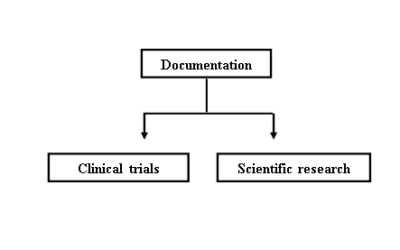
Clinical studies or trials are designed to answer specific research questions related to an investigational new drug. The clinical studies of drug development follow a series of “Phases”.
- Phase I trials: Phase I clinical trials are the first clinical studies performed in healthy humans and usually last from six to nine months. The main purpose of the study is to examine the pharmacokinetics (absorption, distribution, metabolism, and excretion) and safety (adverse events and side effects) of investigational drugs in a small number of healthy subjects (usually 20–80 subjects).
- Phase II trials: Phase II clinical trials continue to monitor the safety of the drug being studied, as well as evaluate its appropriate dosage at achieving its intended purpose. In Phase II, volunteers have the condition for which the new drug is being tested. The study examines the efficacy, safety, and pharmacokinetics and confirms optimal dosage and usage in a small number of patients (usually 100–300 subjects).
- Phase III trials: Phase III clinical trials determine safety and efficacy in sufficiently large numbers of patients with the targeted disease. Several hundreds or thousands of participants are involved in this phase. Depending on the condition being treated and the type of drug, this phase may last from one to four years. This phase objectively verifies efficacy and safety in comparison to existing approved drugs or placebos in large numbers of patients. If the safety and efficacy of NCE are adequately proved, clinical trials may stop at this step and the NCE can advance to the new drug application (NDA) stage.
- Regulatory Review & Approval: A pharmaceutical company can apply [NDA in the USA or a Marketing Authorization Application (MAA) in the UK] to the regulatory authorities to market a drug once proven safe and effective in initial tests and preclinical/clinical research. FDA reviews submitted data and decides on approval. FDA then assesses NDA completeness; if incomplete, filing may be refused. If complete, the review committee has 6 to 10 months to approve. Once the regulatory agency has approved a new medication, the pharmaceutical company may continue to study the drug in Phase IV.
- Post-Marketing Safety Surveillance: Phase IV trials are also called post-market safety surveillance studies. These post-approval studies may continue for a few months to many years. Post-approval studies broaden the possible use of an approved drug by testing in different age groups or other types of patients. They may look at risks and side effects, previously undetected. Phase IV trials increase the analysis of a proven medication to wider patient populations. Also, the effects of long-term use are studied along with the cost as compared to similar medications that treat the same disease.
Conclusion
The drug development process is a meticulous journey involving preclinical evaluations, clinical trials, and regulatory scrutiny. It culminates in the pursuit of safe, effective medications that enhance patient care and well-being. Embarking on the multifaceted journey of drug development, WorkSure® takes center stage as your adept partner for Clinical Trials. With the powerful blend of scientific expertise and regulatory adeptness, we lead you through the drug development journey with resounding success.