Pharmacovigilance and Its Future Indicators: Emerging Trends Shaping Drug Safety
Pharmacovigilance is rapidly evolving in response to the dynamic landscape of healthcare, regulatory demands, and technological advancements. As the healthcare industry shifts toward more personalized and tech-enabled solutions, the role of pharmacovigilance becomes increasingly critical in safeguarding patient health and ensuring the continued efficacy and safety of therapeutic products. Adapting to this changing environment requires not only updated regulatory frameworks but also innovative strategies in monitoring product safety and communicating risks.
To remain aligned with modern clinical practices and patient expectations, pharmacovigilance systems must transition from reactive to proactive models, utilize digital and social platforms for real-time insights, and incorporate the complexities of personalized medicine. These forward-looking shifts are key indicators of the future direction of pharmacovigilance.
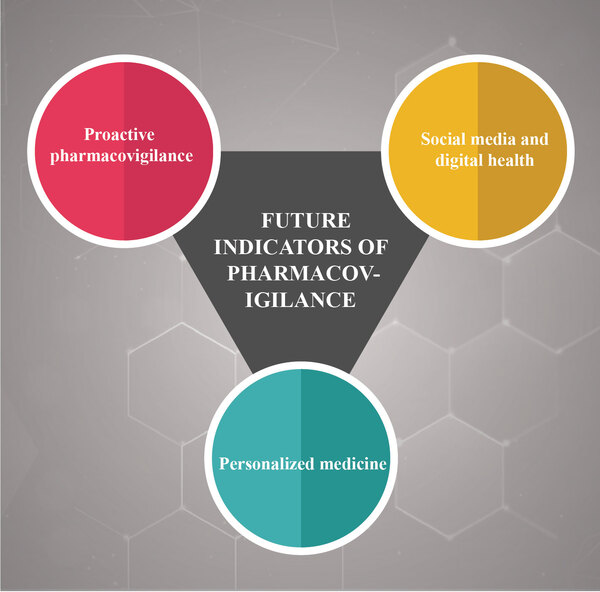
Below are three major trends that signify where the future of pharmacovigilance is heading:
- Proactive pharmacovigilance
Technology is constantly transforming with its new trends and there is a continuous need for consumers for receiving reliable and immediate information through appropriate sources. To adapt to this system, the reactive PV system should transform into a proactive Pharmacovigilance system with proper benefit-risk management capabilities. The consequences of a reactive perspective may lead to halting a clinical study, delay in drug approval, recall of a marketed drug along with brand damage and excessive fines. Besides focusing on the monitoring of adverse events, the bio-pharmaceutical manufacturers of medical devices and drugs should also proactively assess and manage the drug risks throughout its entire lifecycle. It is very crucial to develop a Pharmacovigilance risk management plan including a Risk Minimization Action Plan (RiskMAP) for high-risk devices/ drugs.
- Social media and digital health
Social media is a fundamental part of healthcare organizations related to product safety. It is estimated that 40% of the population deals with their health according to the information received through social media. Most teenagers are affected and trust the medical information available on social media. Adults also seem to be indulged in believing the medical information available on social media sites and sharing their feedback. Hence, the biopharmaceutical and biotechnology companies follow a proactive approach towards utilizing the social media platform in order to assure accurate health and product-related information to patients or consumers. Proactive monitoring acts as an early warning or can be medical information that assists in the drug development process and avoids preventable legal procedures. Digital health service helps to provide insight into the reduction of the number and severity of possible adverse events.
- Personalized medicine
Personalized medicine helps to recognize the biological and diseased characteristics of a patient. It takes into account the patient’s genetic, anatomical and physiological characteristics to particularly recommend the appropriate therapies required for an individually optimized benefit-risk scale. It assures that the benefit is increased; the risk is reduced and enhances the efficacy of many products for individuals. Various risk profiles can be anticipated as a result of genetic mutations that may lead to more adverse drug responses and drug interactions. Personalized medicine also needs complex labeling as they are effective for particular subpopulations or may be required to be administered in different doses to different subpopulations. If a therapeutic product has been approved, a different label is necessary for personalized medicine.
Role of Pharmacovigilance System at WorkSure®
At WorkSure®, we help the biopharmaceutical industry in accomplishing a Pharmacovigilance culture by introducing a reporting paradigm that is simple and cost-effective. Several forms of papers are documented with respect to safety management plans, standard operation procedures (SOPs) for Pharmacovigilance activities, processing, causality assessment, and medical review of safety data, adverse event (AE) reporting, AE Review, serious adverse event (SAE) data reconciliation, reporting of serious adverse reaction (SAR), risk evaluation and mitigation strategies (REMS) and many others. We provide a proactive approach through medical monitoring services, data safety monitoring services and clinical auditing services so that the adverse effects if any can be detected as early as possible.